
We run our website the way we wished the whole internet worked: we provide high quality original content with no ads. We are funded solely by your direct support. Please consider supporting this project.
Podcast: Doesn’t Claiming that the Old Testament Writers were Sometimes Wrong Inevitably Lead to a Slippery Slope?
Greg talks about cataphatic prayer and the role of the imagination.

Send Questions To:
Dan: @thatdankent
Email: askgregboyd@gmail.com
Twitter: @reKnewOrg
Greg’s new book: Inspired Imperfection
Dan’s new book: Confident Humility
Subscribe:



Category: ReKnew Podcast
Tags: Crucifixion of the Warrior God, Cruciform Theology, Hermeneutics, OT Violence, Old Testament
Related Reading
Reading the Bible “by Faith”
The cruciform approach to reading the Bible—and specifically the culturally-conditioned and sin-stained portraits of God—requires faith on the part of the reader, which I argue in Crucifixion of the Warrior God. On one level we can discern by faith that often times God broke through the limitations and sin of the ancient authors, for we…
Did God Destroy Sodom and Gomorrah? (podcast)
Greg considers the destruction of Sodom and Gomorrah and speculates on the nature of the angels who were sent there. Episode 597 http://traffic.libsyn.com/askgregboyd/Episode_0597.mp3
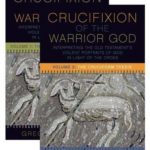
Renouncing Violent Appearances: CWG Excerpt
My ultimate hope for this two-volume work is that readers will acquire the cross-centered “Magic Eye” that allows them to discern the self-sacrificial, indiscriminately loving, nonviolent God revealed on the cross in the depths of the OT’s sometimes horrifically violent depictions of God. And in seeing this, my hope is that readers will see that…

God Became What He is Not To Reveal What He Is
We are saved because Jesus became the curse of the law for us (Gal. 3:13). So too, the way Christ freed us from the condemnation of sin and enabled us to “become the righteousness of God” was by becoming sin for us (2 Cor. 5:21). What is more, since the curse of the law includes enslavement to…
Did the Crucifixion Allow God to Atone for His OWN Sins? (podcast)
Greg considers God’s nature and if he could sin. Dan confesses an old gambling habit. Episode 477 http://traffic.libsyn.com/askgregboyd/Episode_0477.mp3

Can Good Theology Be Innovative?
For many in conservative Christian circles innovation in theology and biblical interpretation is viewed as suspect, if not sinful. To this I would simply respond by pointing out that the attitude that would dismiss hermeneutical or theological proposals (like those offered in The Crucifixion of the Warrior God) simply on the grounds that they include…