
We run our website the way we wished the whole internet worked: we provide high quality original content with no ads. We are funded solely by your direct support. Please consider supporting this project.

On The Calvinism Debate In Chicago Last Week
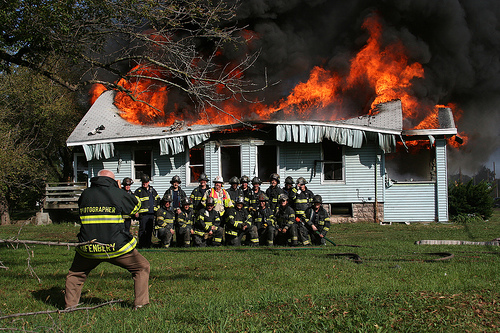
Image by OldOnliner via Flickr
For those of you who were unaware of it, there was a debate in Chicago last week on New Calvinism that was sponsored by Sojourn Network. Our friend T. C. Moore did an outstanding job of covering it. You can read his impressions over on his blog by clicking here. He also has embedded video of the debate if you’d like to check it out for yourself.
Just to whet your whistle and encourage you to check out T. C.’s article, we want to feature a point of the debate that we’re pretty passionate about. One of the metaphors that Austin Fischer presented to highlight the problem with New Calvinism was the image of a “firefighting arsonist”. T. C. expounds on it here:
The first killer metaphor was employed by Fischer. He wanted those who would watch this debate to know that despite the New Calvinists’ clever attempts to disguise it, the reality is that whatever condition they claim God is saving humanity from, their theology necessitates that God caused it. If it is true, like the Calvinists claim, that God rescues a group of preselected people from the tortures of their conception of hell, it is only because God “ordained” that humanity would be damned in the first place.
Fischer’s metaphor of God wanting the world to “burn down” conjures the image of the firefighter who has a narcissistic pathology which tempts him or her to start the very fires he or she is charged to rescue citizens from. This firefighter puts lives in danger only for the “glory” of being the one who swoops in to the rescue.
The reason this metaphor is so damning (pun intended), is because the New Calvinist routinely use the idea of God “saving some” from hell as the pinnacle of their argument for God’s redemptive glory. “Everyone should go to hell for their sins” Calvinists routinely shout. But, this is only just if human beings are responsible for their sin. In New Calvinism’s conception of why people go to hell, it isn’t because they have sinned and must suffer the consequences. No, it is because God “ordained” that they would sin and suffer the consequences before God brought creation into being. If any theology “robs God of glory,” it is the one that makes God out to be a psychopathic firefighting arsonist.
Category: General
Tags: Austin Fischer, Brian Zahnd, Calvinism, Debate, T.C. Moore
Related Reading

Reflecting on Open2013
T. C. Moore has posted some of his reflections from the Open Theism conference. T. C. was one of several people who pulled this conference together and he did a great job. He’s also incredibly smart and very active in the open view community. Also, he’s a young church planter in Boston and I’m sure he’s…
David Flowers on the Theo Graff Podcast
Our friend David Flowers was interviewed by T. C. Moore for the Theo Graff Podcast. David floated onto our radar a couple of years ago and we hope you’ll check him out. He has a keen mind and a passionate heart for the Kingdom of God. You can find T. C.’s interview with David here.…
Is Suffering Part of God’s Secret Plan?
In the Christian tradition since Augustine, the most common explanation for the apparent arbitrariness of life and God’s interaction with humanity has been God’s mysterious will—his “secret plan,” as Calvin says. Whether or not a child is born healthy or a wife is killed by an intruder is ultimately decided by God. If we ask…
Free Will: How free will presupposes a great deal of determinism
This particular video was recorded last week when the forecast called for a high of -4F. Greg makes light of the freezing conditions before he settles into the topic of how a mostly determined world is actually the needed context for free will to operate. Stay warm out there!
Free Will: Is it a coherent concept?
Greg is going to be spending the next several blogs talking about the idea of free will. In this first reflection, he discusses whether it is coherent to speak of a decision that is not determined or exhaustively caused.