
We run our website the way we wished the whole internet worked: we provide high quality original content with no ads. We are funded solely by your direct support. Please consider supporting this project.

Trying to Acquire What You Already Have
Image by Joshua Earle
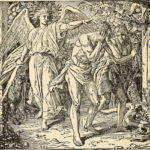
The lies Satan told to Eve in the garden made eating from the forbidden tree (the Tree of Knowledge of Good and Evil) look desirable. On the one hand, the lies caused her to question God’s trustworthiness. And correspondingly, on the other hand, they also caused her to question whether it is enough to simply live in union with God, creating a perceived internal vacuum. The tree provided Eve with a perceived solution to her emptiness, one that didn’t involve depending upon God, whom she now deemed as being untrustworthy.
There was something she could do about the hunger within, the vacuum.
Just like Eve, we believe we can fill our emptiness by doing something and acquiring things. We believe we can give ourselves fulfilling worth apart from God by performing. We believe we can become self-sufficient through our efforts. We believe we can fix ourselves as well as other people. All of this is to say, we believe we can and should become wise, like God, knowing good and evil.
In the temptation story of Genesis 3, the serpent didn’t promise Eve something she didn’t already have. The serpent promised Eve that should could be “like God.” Yet she and Adam were already made in the very image and likeness of God (Gen 1:26-27). The craftiness of the serpent is found in his cunning ability to make Eve think she had to become what she in fact already was.
How else could he tempt a person who already had all she would ever need? The serpent convinced Eve that her life had to be found in doing rather than simply being. He convinced her to break fellowship with God in order to possess the very thing God has already given her for free: her being in the “image and likeness of God.”
Had Eve remained in union with God, had she rejected the Accuser’s lie about God, the serpents’ promise that she could become like God would have been utterly vacuous. She would have remained in the peace of knowing that she already reflected God’s image and was full because of the unsurpassable worth God continually poured into her.
Had Adam and Eve resisted the serpent’s lie about God, and therefore about themselves, the forbidden tree would have remained a helpful “No Trespassing” sign placed in the garden by a God who had their best interest in mind. It would have been a boundary that freed them to focus on the one thing God called them to do: love as God is love.
However, when they believed the lie about God and self, they began to see the world through their own eyes, separate from God. Now things started to appear good and evil. God was “evil,” they became empty and eating of the tree became “good.”
The moment they ate the fruit, they ceased being the wonderful, God-centered, God-dependent human beings the Creator intended them to be and became empty human doings—perpetually trying to acquire what they already had been given.
The human race now lives life illegitimately trying to become what God has already made us to be. The world has become a stage upon which we perpetually assess things and people as good or evil, depending on how we think they can or can’t fill the vacuum in our hearts. We thus use everything and everyone in the world as surrogate gods, trying to get from people, deeds, and things what only God can give—what Go has already given—freely.
—Adapted from Repenting of Religion, pages 146-148
Category: General
Tags: Adam and Eve, Character of God, Contentment, Judgment, Lies
Topics: Following Jesus
Related Reading
The Flesh: 4 Things to Know
The New Testament contrasts “life in the Spirit” with “life in the flesh” (see Gal 5:16-20). In some translations, the word for “flesh” (sarx, in the Greek) is translated as “sinful nature” as if one’s identity, or who we are in our essential being, is sinful. However, such a view of the flesh denies that…
The Good Samaritan, Non-Violence & Eternal Life
Renaud Camus via Compfight An expert in the law asked Jesus what he had to do “to inherit eternal life” (See the story in Luke 10:25 and following). Jesus asked him what he thought the law said about this issue. The man responded, “’Love the Lord your God with all your heart and with all…

Should We Condemn Unbelievers For Their Own Good?
We are to have faith that what God says about himself in Christ is true, what God says about us in Christ is true, and what God says about others in Christ is true. So whatever the appearances may be, we are to have faith that God is working in others to do what…

A Brief Theology of Sin
We were created for unbroken, loving fellowship with God. We see this in the creation story. As we share in this unbroken, trusting fellowship with God, we participate in the very love that the Father, Son, and Holy Spirit share throughout eternity. We also read in the creation story that sin ruptured this fellowship and sidetracked…

Repent! … From the Sin of Religion
People often think that being Christian is about “being religious,” but loving others in the way that Christ instructs us is about as far removed from religion as anything could be. Religion, as I use the term, is a system of beliefs and behaviors one embraces as a means of getting life—whether this be feeling…