
We run our website the way we wished the whole internet worked: we provide high quality original content with no ads. We are funded solely by your direct support. Please consider supporting this project.
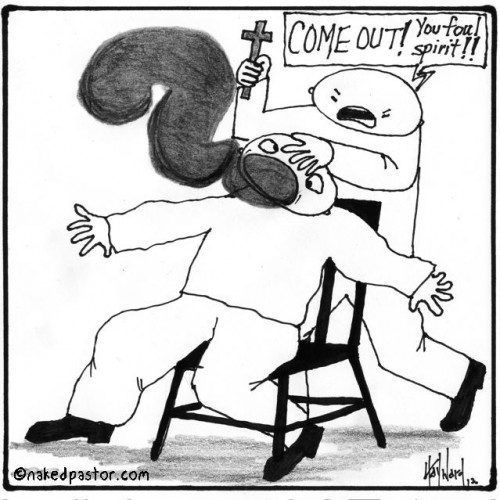
We Won’t Treat Your Questions This Way
Related Reading

Isn’t God “changing his mind” an anthropomorphism?
Question: Traditionalists argue that passages that refer to God “changing his mind” are anthropomorphic, depicting God in human terms. Open Theists take these passages literally, however. But if you’re going to take these passages literally, it seems you should, for consistency’s sake, also interpret passages about God “coming down” from heaven literally (e.g. Gen. 11:5;…
What is the significance of Numbers 14:12–20?
In response to Israel’s bickering the Lord says “I will strike them with pestilence and disinherit them, and I will make of you [Moses] a nation greater and mightier than they” (vs. 12). Moses asks the Lord to forgive the people, and the Lord eventually responds, “I do forgive, just as you have asked” (vs.…
In a democracy, don’t Christians have a responsibility to participate in politics?
Question: You’ve argued that Christians shouldn’t try to gain power in government on the grounds that Jesus didn’t try to gain power in the political system of his day. But his government didn’t allow for such power. Caesar and Pilate weren’t elected by anyone. Our government allows for this. So don’t we have a responsibility…
How do you respond to Joshua 11:19–20?
“There was not a town that made peace with the Israelites, except the Hivites…all were taken to battle. For it was the Lord’s doing to harden their hearts so that they would come against Israel in battle, in order that they might be utterly destroyed…” (cf. Exod. 7:3; 10:1; 14:4; Deut. 2:30) Some compatibilists argue…
Is homosexuality a sin?
There are three passages in the Old Testament (Gen. 19: 1-13; Lev 18:22; 20:13) and three in the New Testament (Rom. 1:26-27; 1 Corinthians 6:9-10; I Tim. 1:10) that have traditionally been read as prohibiting homosexuality. On top of this, the entire biblical narrative presupposes that sex is supposed to take place between a man…
Does the Bible teach total non-violence?
I wouldn’t say the whole Bible teaches non-violence, for you find Yahweh engaging in quite a bit of violence in the Old Testament. But I would say that the whole Bible clearly presents non-violence as God’s dream for humanity, and I would most certainly say this dream is realized in Jesus Christ and the Kingdom…