
We run our website the way we wished the whole internet worked: we provide high quality original content with no ads. We are funded solely by your direct support. Please consider supporting this project.

Lord Willing? Part 3
In this final segment of Greg’s discussion with Jessica Kelley about her book Lord Willing?, Jessica talks about how to respond to someone who is grieving or in crisis. You can find part 1 here and part 2 here. We’re so grateful that Jessica took the time to share her story with us. We know that her work will make a difference to so many who are suffering.
Category: Sermons and Video Clips
Tags: Henry Kelley, Jessica Kelley, Lord Willing?, Open Theism, Problem of Evil, Theodicy, Warfare Worldview
Topics: The Problem of Evil
Related Reading
Free Will: Are studies that demonstrate genetic determinism a threat to free will?
Greg shares his continuing thoughts on free will with a thought experiment (and a hand-drawn graph!) granting that we are largely determined by forces outside of our control. If we grant this presupposition, does that mean that free will is an illusion or insignificant? Find out!
Is exhaustively settled foreknowledge essential to God’s identity
In this episode Greg discusses several passages in Isaiah that imply God’s foreknowledge is a primary differentiator between Isaiah’s God and all other gods. Links: Greg’s book: “God of the Possible“ http://traffic.libsyn.com/askgregboyd/Episode_0023.mp3

Is the open view the only view that is compatible with the Incarnation?
Question: You have said that the Open view of God is the only view that squares with the Incarnation and the only view that truly exalts God’s greatness. On what basis do you say this? Answer: The revelation of God in the Incarnation is the ultimate expression of God’s willingness and ability to change that…
How do you respond to the book of Revelation?
“The revelation of Jesus Christ, which God gave him to show his servants what must soon take place…” (1:1). Because many modern evangelical readers consider almost everything in the book of Revelation to be a sort of “snap shot” about what shall occur at the end of history, it will prove more beneficial to deal…
Sermon Clip: Does Romans 9 predestine you to Hell?
Did God predestine you to Hell? Can he even do that? In this short sermon clip, Greg Boyd talks about his own struggles when trying to understand Romans 9 which on the surface seems to imply that God determines who goes to heaven and hell. In the full sermon, Greg takes a deep look at…
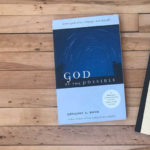
Podcast: The Making of God of the Possible
Greg talks about making his book “God of the Possible,” then offers his initial thoughts on Thomas Oord’s book “God Can’t.” http://traffic.libsyn.com/askgregboyd/Episode_0468.mp3