
We run our website the way we wished the whole internet worked: we provide high quality original content with no ads. We are funded solely by your direct support. Please consider supporting this project.

Why Your Imagination Matters
The flesh, which we discussed in this post earlier this week, is shaped by Satan’s web of deception that deeply infects our imaginations. This is why it has such power to move us to perform in order to obtain life and then to hide our failures when we fall short of true life. And of course the end result is destruction.
Satan’s deception is anchored in powerful, imaginative misrepresentations of reality, and until these lies are confronted with truth (as explored in this post) in ways that are at least as vivid and powerful as the misrepresentations, the lies of the flesh will continue to dominate our lives. Until this happens, our experienced self-identity, our old self, will continue to exercise a strong influence in our lives, suppressing the truth about who we are in Christ. We are new creations in Christ (2 Cor 5:17), but if this truth is believed in the form of mere information while the old self is continually experienced in vivid imaginative ways, we will find it nearly impossible to display our new nature consistently.
One of the most fundamental problems with contemporary Western Christianity is that we have lost the positive spiritual use of our imagination. So many of us only know Christ intellectually. We know and experience the web of deception imaginatively and vividly, but often this is not how we experience our Christianity.
For many, faith is little more than intellectual assent to certain propositions and a commitment to live a certain way. So is it surprising that our experienced self-identity continues to reflect more the pattern of this world rather than conformity to Jesus Christ?
Is it surprising that our old self seems more real than all the incredible things Scripture says about our new self?
If our faith is going to be powerful and transformative, it is going to have to be imaginative and experiential. St. Ignatius, founder of the Jesuits, wrote “It is not knowing a lot but grasping things intimately and savoring them that fills and satisfies the soul.” Memories shape us profoundly because we grasp them and savor them not as information, but “intimately.” This is the manner in which we need to embrace our faith if it is to satisfy our souls and transform our lives.
It’s a wonderful thing to know that God is love (1 John 4:16), but this information will not significantly impact us until we can intimately grasp and savor the truth that God loves us individually. It’s a wonderful thing to know that Jesus died for the world, but this information will not significantly impact the way that we experience ourselves and the world until it becomes vivid, experiential, and personalized. I need to be able to savor in a concrete way the truth that Jesus died for me, that he loves me to this unfathomable degree, and that I am completely forgiven.
This involves the imagination.
We need to imagine truth and savor it; only then can the flesh that holds us in bondage be broken. We need to see pictures of grace in our minds and savor them; only then can grace break our flesh-driven compulsion to perform. We need to engage imaginatively in the unconditional love of God; only then can it break our flesh’s need to hide.
When we do these things, we will find ourselves savoring wholeness and life, our new identity in Christ, rather than death and destruction.
-Adapted from Seeing Is Believing pp. 79-80
Image by margot pandone via Unsplash
Category: General
Tags: Imagination, Imaginative Prayer, Transformation
Related Reading

From the Heart: Transformation
We absolutely love getting letters of testimony. If you have been impacted by this ministry in a significant way, please consider sharing your story with us. Here’s one we received this week that rocked our world. Hi Greg Boyd, With great joy and inspiration I am writing about a get-real encounter with God I had…

“I’m Saved, but I Still Struggle. Why?”
Many people become Christians thinking that salvation means that they will be free from the struggle with sinful behaviors or destructive ways of thinking. How can Christ live in us while at the same time we have un-Christlike thinking and actions? If the Bible tells us that we are victorious, why do we still experience…

Podcast: Is Using the Imagination Spiritually Dangerous?
Greg talks about cataphatic prayer and the role of the imagination. http://traffic.libsyn.com/askgregboyd/Episode_0469.mp3
The Image That Transforms
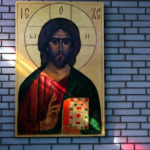
With the Advent of Jesus, we see the icon of God, the One in whom the otherwise invisible God is seen. The word icon comes from the Greek word for “image” (eikon). While it is idolatrous for humans to make and worship icons of God (Lev 19:4; 26:1), it’s certainly not idolatrous for us to…

What the Cross Tells Us About God
Whether we’re talking about our relationship with God or with other people, the quality of the relationship can never go beyond the level of trust the relating parties have in each other’s character. We cannot be rightly related to God, therefore, except insofar as we embrace a trustworthy picture of him. To the extent that…

Greg’s Review of Changing Your Mind by Victor Copan
Several months ago Victor Copan introduced himself to me at the end of a Woodland Hills Church service. He told me about his recently published book, Changing Your Mind. “I know you’re into spiritual disciplines and neuroscience,” he said, “so I suspect you might enjoy my book. It’s about the interface of these two topics.”…