
We run our website the way we wished the whole internet worked: we provide high quality original content with no ads. We are funded solely by your direct support. Please consider supporting this project.

Christian Utopia

Fergal of Claddagh, OP via Compfight
A little meditation on Christian Utopia and the Body Politic as we stand poised on the eve of the election in America. We affirm that Jesus will indeed “establish His kingdom on earth” but it won’t come through the exercise of power. Rather, God’s kingdom will come as his people imitate his self-sacrificial willingness to serve.
From the blog:
This brand of Christianity comes from the idea that God will establish His kingdom on earth. It will be established through human power and might leading to a form of theocracy in which the Christian God will rule their nation through divinely elected Christian men and women. This is the very same ideology that permeated 1st century Judaism as they waited in eager anticipation for their prophesied Messiah to deliver them from the great oppressor and establish a great Jewish utopia. When Jesus the true Messiah came to Jerusalem not on a majestic steed with pomp and circumstance, but instead on an obscure colt with only a few ragtag disciples trailing behind, the Jews were most assuredly disappointed. Only later did they witness this Jewish King being flogged and ultimately executed upon a Roman instrument of death known as a cross. Little did they know that the Kingdom of God was indeed in their midst. But, the way in which Jesus became King and Lord over all was not by might, power, and politics, but through the sheer love, grace, truth, peace, sacrifice, and service toward others. Not a single sword was raised, nor a single political action signed; His kingdom was ushered in by individuals willing to love and serve others at the expense of sacrificing their own lives just like their King.
Category: General
Tags: Kingdom Living, Politics
Related Reading

Voluntary Suffering and the Kingdom
In a post from two days ago, I wrote about the call to voluntary suffering for others as it is laid out in the New Testament. For the first three centuries of the church, Christians understood this call as they sought to follow Jesus’ example of forgoing the use of violence and expressing God’s self-sacrificial…

5 Differences Between The Kingdom of God and the Kingdom of the World
Image by matthijs rouw via Flickr The kingdom of God looks and acts like Jesus Christ, like Calvary, like God’s eternal, triune love. It consists of people graciously embracing others and sacrificing themselves in service to others. It consists of people trusting and employing “power under” rather than “power over,” even when they, like Jesus, suffer because…

Christians and Politics: What are the different views?
How involved should Christians be in secular politics? Throughout history, Christians have embraced a number of different perspectives on this issue. These perspectives can basically be broken down into three groups. First, some Christians believe that one of the church’s jobs is to transform and ultimately control politics. This view has often been labeled the…
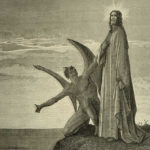
Jesus was Not a [Socialist]
Article by Dan Kent Our political climate right now exhausts me. The fracturing. The bullying. The ideological mobs. I feel like I’m surrounded by a hundred Towers of Babel babbling at me all day long, pummeling me with endless propaganda and page-after-page of facts. “Look at the facts!” they implore. They want me in their…
Homosexuality and the Church: Finding a “Third Way”
Here is a word I a shared this last weekend with Woodland Hills Church (where I’m senior pastor) in response to numerous questions I’ve received over the last several months. People have asked me why the leadership of WHC refuses to jump on the bandwagon of evangelical churches in the Twin Cities who rally their…

Jesus’ Kind of Social Justice
For many, the primary way of building the kingdom is to influence politics in order to make America more Christian. Others take the opposite approach, concluding that Jesus didn’t try to overhaul the political systems of his day through political means; therefore Christian faith is only a private matter that has no social relevance. Both…