
We run our website the way we wished the whole internet worked: we provide high quality original content with no ads. We are funded solely by your direct support. Please consider supporting this project.
The Flesh: 4 Things to Know
The New Testament contrasts “life in the Spirit” with “life in the flesh” (see Gal 5:16-20). In some translations, the word for “flesh” (sarx, in the Greek) is translated as “sinful nature” as if one’s identity, or who we are in our essential being, is sinful. However, such a view of the flesh denies that our “old nature” is really old and that our identity is not completely “in Christ” as God’s children.
Instead the flesh is a deceptive way of seeing and experiencing oneself and one’s world, and thus a deceptive way of living in the world. It’s a way of thinking, experiencing, and living that is conformed to the “pattern of this world” (Rom 12:2). It is a worldview that is based upon a lie, which therefore opposes the truth about God and about our identity in Christ.
Let’s briefly introduce four aspects of the flesh.
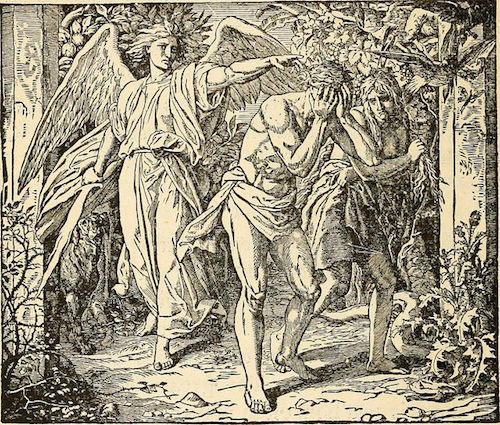
- Deception. Satan is the father of lies (John 8:44). Satan’s original lie from the Garden of Eden was that God is not really loving and giving. The serpent basically told Eve, “If you believe God loves you and has your best interest in mind, you are wrong! God is keeping your eyes closed and preventing you from realizing your full potential because he doesn’t want any competition!” Corresponding with this deception about God, the serpent told Adam and Eve that their freedom, their identity, was somehow separate from relationship with God. The lie suggested that they were much more self-sufficient and had more potential than God would have them believe.
- Performance. The second aspect of the flesh follows directly from the first. When we believe our life is based on the deception that God is not able or willing to fill us with life, we strive for fullness of life by doing things and acquiring things. Everything from riches to religion begins to look like potential food to feed the soul. Insofar as we live in the flesh, we assume that our worth must be acquired from the world around us and by our own effort.
- Hiddenness. If we choose not to find life in a beautifully dependent relationship with our Creator, we must strive to find life in our doing, in how we appear, and in what we can acquire on our own. These strategies for acquiring life never fully satisfy, even when we are successful at them, and so we have a persistent sense of emptiness and shame that we try to hide. For example, if part of my strategy is being acknowledged as successful or holy, I must conceal all failures and shortcomings. The reality of who we are must be suppressed for the sake of how we want to appear and what we want to do as a way of getting life.
- Destruction. The fourth aspect of the flesh is the consequence of the first three: we die. God is life itself, and when we are separated from God, trying to acquire life on our own, we die. Our natural union with God is severed, and we are blocked from God’s provision.
In sum, whenever we believe a lie about who God is and who we are, we cease trusting God to be our sole source of life. Whenever we cease trusting, we have to perform as a strategy for getting life. Whenever we perform as a strategy for getting life, we have to hide every aspect of ourselves that is inconsistent with this strategy. And whenever we hide aspects of ourselves, we are in the process of destroying ourselves.
—Adapted from Seeing is Believing, pages 35-47
Category: General
Tags: Adam and Eve, Life, Shame, Sin
Related Reading
Podcast: What Does it Mean that God No Longer Counts Our Sins Against Us?
Weights and Measures and Merciful Pleasures. Greg discusses divine math. http://traffic.libsyn.com/askgregboyd/Episode_0392.mp3 Painting: Tea Party By: Andrei Ryabushkin Date: 1903

Penal Substitution View of Atonement: Did God the Father Just Need to Vent?
In this video blog, Greg outlines the penal substitution view of atonement which says that the Father poured out his wrath on Jesus instead of us so that we could be forgiven. This view is very common and you might even be nodding your head in agreement with that description. However, this view creates some…

Is homosexuality a sin?
There are three passages in the Old Testament (Gen. 19: 1-13; Lev 18:22; 20:13) and three in the New Testament (Rom. 1:26-27; 1 Corinthians 6:9-10; I Tim. 1:10) that have traditionally been read as prohibiting homosexuality. On top of this, the entire biblical narrative presupposes that sex is supposed to take place between a man…

ReThinking the Source of Life
Over the next few weeks, we will be exploring the twelve convictions of the ReKnew Manifesto. The first of which focuses on where we get life. In many of my writings, I speak about the source of “life.” By this I mean one’s core sense of identity, worth, significance and security. Over the years, I’ve…

Avoiding the “S” Word: Sin
In our culture today, we don’t like to talk about sin. While most of us have a deep sense that something is off, that something is wrong with ourselves and the world, and many know or feel that they are guilty of something, this kind of talk is avoided. Instead, we evaluate ourselves by our…
Forgiveness in the Christus Victor View of the Atonement
Did Jesus need to die on the cross to satisfy God’s wrath in order for us to be forgiven? Greg discusses the role of forgiveness in the Christus Victor view of the Atonement.