
We run our website the way we wished the whole internet worked: we provide high quality original content with no ads. We are funded solely by your direct support. Please consider supporting this project.

False Gods in the Church
We often think of an idol as a statue, but an idol can be anything we use to meet the needs that only God can meet. In other words, a false god.
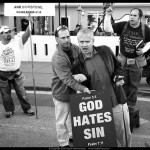
There is no end to the false gods we create. In Western cultures we often strive to feel worth and significance by acquiring money, possessions, and power. We bow down to the false gods of materialism and control. Some try to relieve their inner emptiness by trying to get approval for being sexy, talented, or successful. They bow down to a false god of fame. Some feed their hunger for life by convincing themselves they’re special to God because they believe all the right things and engage in all the right behaviors—in contrast to others who believe the wrong things and engage in all the wrong behaviors. These bow before the false god of religion, which is one of the ways that idols end up in the church.
When we chase after false gods, we seldom realize what we’re doing. We don’t think of it as idolatry. In fact, it’s possible to bow to false gods while believing you’re bowing to Jesus Christ. What we believe often has little to do with reality.
In the West, we tend to attach great importance to what we believe. This seems to be especially true of Christians. We treat beliefs as though they have magical power, as though merely believing something makes it so. For instance, many assume that believing Jesus is Lord of their life magically makes him Lord. This is undoubtedly why so many evangelical churches spend an exorbitant amount of energy getting people to make a one-time confession of belief.
The truth is, merely believing Jesus is Lord no more makes him Lord of my life than believing Vladimir Putin is the president of Russia makes me his follower. For Putin to be my leader, I would need to submit my life to him and become a citizen of Russia. Likewise, for Jesus to be my Lord, I need to submit my life to him and become a citizen of his Kingdom.
This does not mean that beliefs are not important. Obviously it’s impossible to surrender to Jesus unless you first believe that he is Lord. Still, the belief is not itself the surrender. Embracing a belief is something you do in your mind. Actually surrendering your life is something you can only do with your will.
The important question, then, is not what you believe. The important question is what you decide to do, moment-by-moment, on the basis of what you believe.
—Adapted from Present Perfect, pages 46-48
Photo credit: Criss! via Visual hunt / CC BY
Category: General
Tags: Belief, Religious Idolatry
Related Reading
The Kind of Sin Jesus Publicly Exposes
Image by danny.hammontree via Flickr Religious sin is the only sin Jesus publicly confronted. The religious variety of the forbidden fruit is the most addictive and deceptive variety. Instead of acknowledging that judging others is prohibited, religious idolatry embraces the knowledge of good and evil as divinely sanctioned and mandated. It gives the illusion of being on…

Changing Beliefs
Stephen Mattson is a follower of ReKnew and a member of Woodland Hills Church who posted a piece on Sojourners titled Christians: It’s NOT a Sin to Change Your Beliefs. He points out that doubt and questions are a natural and needed part of any Christian’s life, and our community needs to change the ways we…

Lighten Up: Believing in Believing
OK, we don’t really think this is the difference between theology and philosophy, but how does this guy not get that not believing in believing is, itself, a belief?
Thinking Biblically?
Olga Caprotti via Compfight Micah J. Murray over at Redemption Pictures posted this reflection called Beware of Thinking Biblically. The image of a google search on the topic is worth the price of admission. Christians throw around this phrase in some really damaging ways, as Rachel Held Evans demonstrated in her recent publication of A Year…
Believing Is Not Enough
One of the core elements of evangelical church life is the conversion experience. From old-time revivals, to seeker-sensitive church services, to post-modern outreach strategies, evangelicals have placed a very high emphasis on the point of conversion. This practice is based on a theological perspective; it’s not just a tactic to get people in the church.…

Possibility of Love
In this video, Greg explores the core sin that stands in the way of love. You might be surprised by what it is. Video by The Work of the People