
We run our website the way we wished the whole internet worked: we provide high quality original content with no ads. We are funded solely by your direct support. Please consider supporting this project.

Is Racism Still a Problem? Does the Church Care?

On Friday, we posted a piece by Greg on the importance of racial reconciliation in the Kingdom of God. (Click here to read it.) This is a part of the Synchro blog for MennoNerds on Race. Watch this video for more on the topic. The following is an illustration taken from an early draft of a chapter on this topic in Greg’s book The Myth of a Christian Religion.
________________
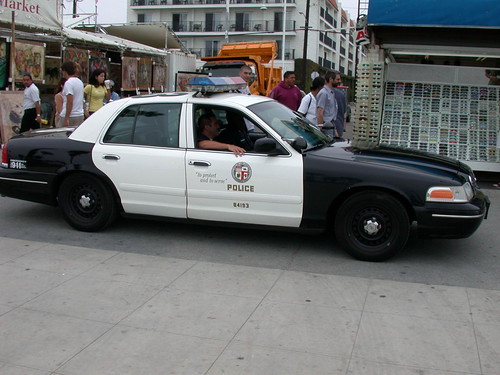
Several years ago I was listening to a Christian radio talk show that was discussing the issue of “racial profiling.” It was in response to a study that demonstrated that in Minnesota (the liberal North!) black men were much more likely to be stopped in their cars by police than white men. The white host of the show expressed his opinion that the study had to be flawed and that racial profiling is very rare. He then took calls from the audience.
The arrogance of the talk show host amused me. But the next half hour of call-ins left me dumbfounded.
One caller early on identified himself as African American. He gave two examples from his own life of being pulled over and questioned by police for no legitimate reason. Not surprisingly, while he said he believe most white police officers were fair and that few are consciously racist, he nevertheless believed racial profiling was a problem in the police force.
All the remaining callers identified themselves as white, and without exception, each denied racial profiling was a problem. Some even expressed anger over the African American caller who suggested otherwise. Several said they were sick and tired of blacks “playing the race card.”
Now think about this. If racial profiling was in fact at times happening, how would any of the white callers know about it? By definition, it wouldn’t be happening to them. The only way white folks could learn about racial profiling, if it in fact takes place, would be to learn about it from the one’s who get profiled. Yet, this was the very thing all the white callers on the station seemed unwilling to do. Instead, because racial profiling never happened to them, they insisted it simply doesn’t happen.
Sitting at the top of a pyramid of privilege that affords us white folks the luxury of hovering above a world of racialized walls many others have to contend with, it’s possible for us whites to remain blissfully unaware that our “normal” is not necessarily other people’s “normal.” And this is why many whites have trouble understanding systemic racism and why many see reconciliation as a minor, optional, addendum to the Gospel.
Category: General
Tags: Kingdom Living, Mennonerds, Myth of a Christian Religion, Racial Reconciliation, Racism
Topics: Ethical, Cultural and Political Issues
Related Reading

Reversing Babel
Several generations after the flood, we read in Gen 11 how humans were still living in one locale and had one common language and culture. Then someone came up with the brilliant idea that they should construct an enormous tower that would reach “to the heavens” in order to make a name for themselves and…
The Call to a Cruciform Life
Jesus repeatedly taught that following him meant that one had to be willing to “pick up their cross daily and follow [him]” (Lk 9:23; 14:27). Picking up our cross is the centerpiece of following Jesus because this was the centerpiece of what Jesus was all about. The thematic centrality of the cross is also illustrated…

Showing Up
Jonathan Kos-Read via Compfight Shauna Niequist over at Donald Miller’s Storyline blog shared some thoughts on Why You Should Stop Waiting for Life to be Perfect. She points out that sometimes this waiting for perfection gets in the way of noticing the goodness that is already here for you. Show up to your life today, even…

Taking the Lord’s Name in Vain
These things need to stop as it relates to our faith and our politics. Image by Katie Tegtmeyer. Sourced via Flickr.
Sermon: The Salt and Light Revolution
What does it mean to be the salt and light? In Greg’s sermon last weekend, he explores how followers of Jesus can step out of the crowd in ways that bring these good things to the world around us. Visit the Woodland Hills website for this week’s sermon resources.

Voluntary Suffering and the Kingdom
In a post from two days ago, I wrote about the call to voluntary suffering for others as it is laid out in the New Testament. For the first three centuries of the church, Christians understood this call as they sought to follow Jesus’ example of forgoing the use of violence and expressing God’s self-sacrificial…