
We run our website the way we wished the whole internet worked: we provide high quality original content with no ads. We are funded solely by your direct support. Please consider supporting this project.

On Biblical Inerrancy
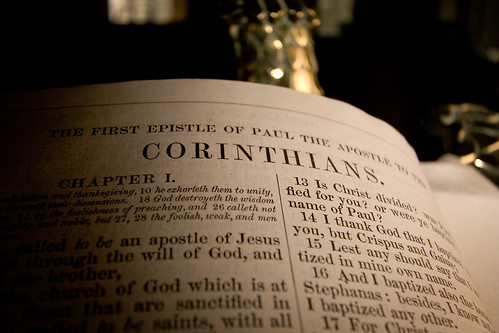
Matthew Kirkland via Compfight
In this essay, Peter Enns explains his views on Biblical inerrancy and the complexities encountered as evangelicals attempt to define the term.
From the essay:
Speaking as a biblical scholar, inerrancy is a high-maintenance doctrine. It takes much energy to “hold on to” and produces much cognitive dissonance. I am hardly alone. Over the last twenty years or so, I have crossed paths with more than a few biblical scholars with evangelical roots, even teaching in inerrantist schools, who nervously tread delicate paths re-defining, nuancing, and adjusting their definition of inerrancy to accommodate the complicating factors that greet us at every turn in the historical study of Scripture.
(Disclaimer: We link to various articles and blog posts not necessarily because we are in 100% agreement with them, but because we think they offer a perspective worth thinking about)
Related Reading

How do you respond to Bart Ehrman’s book, “Misquoting Jesus”?
Question: I just read Bart Ehrman’s book Misquoting Jesus and it’s sort of rocked my world. How can we believe the Bible is God’s inerrant Word when we don’t even know what the original Bible said? Answer: I actually went to graduate school with Bart Ehrman (at Princeton). We used to smoke pipes together up…

An Alternative to Biblical Inerrancy
As with all other theological issues, when it comes to affirming that Scripture is “God-breathed,” everything hangs on where one starts. A dominant strand of the Evangelical tradition started with the assumption that, if God is perfect, and if Scripture is “God-breathed,” then Scripture must also be perfect or “inerrant.” Other “progressive” evangelicals have responded by…

Is the Bible History?
Even though I argued for interpreting the final form of the biblical canon as opposed to using the history behind the text in my post yesterday, I am not endorsing the radical post-modern view that biblical texts possess “semantic autonomy” and thus lack any historical referentiality. While I have no problem whatsoever accepting that God used folklore and myth…

When the Last Few Moments Changes Everything
One of the central things ReKnew wants to accomplish is to challenge followers of Jesus to accept that the self-sacrificial love Jesus revealed on the cross is the definitive, and even the exhaustive, revelation of God’s character. Everything about God, we believe, should be understood through the lens of the cross. For most Christians, Jesus…
Is the Bible a Legal Textbook?
Olga via Compfight Too much theology treats the Bible as if it were legal textbook. In the following except from Benefit of the Doubt, Greg addresses the problems when we approach theology and Scripture this way. Incidentally, if you like these excerpts we’ve been posting from Benefit of the Doubt, you’re not going to want to…