
We run our website the way we wished the whole internet worked: we provide high quality original content with no ads. We are funded solely by your direct support. Please consider supporting this project.
Contemplating Food Choices
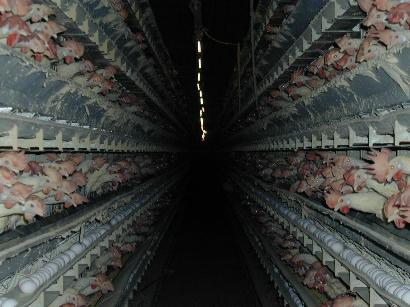
As many of you know, Shelley and I have been vegetarians for the last eight years or so. This is a personal conviction, not a doctrine, but there are compelling reasons for adopting this lifestyle. The main conviction that led me to quit eating meat was that I felt I should never kill anything out of convenience or for pleasure. A close second was that the way animals are treated on industrial farms is absolutely hideous. As a person who’s first mandate from God is to reflect reflect his loving character by caring for the earth and the animal kingdom (Gen 1:26-28), I feel strongly that I should not participate in, let alone benefit from, this barbaric and even torturous treatment in any way. (I encourage all meat-eating followers of Christ to find out how your food choices impact animals and to buy your meat only from free-range ranch farms.) Since Shelley and I have made this decision, we have notice many other unintended benefits as well. For example, we’ve both observed significant health benefits. It’s been good for our food budget. And I almost immediately noticed a greater appreciation for, and delight in, the inherent worth of all living things.
All that being said, here is a really interesting article that should give all people — but especially followers of Christ — another reason to adopt a vegetarian diet. In fact, it seems to me that, even if there were no other benefits to becoming a vegetarian, the future that this article paints could be (I almost wrote, “should be”) reason enough. I hope you read it with an open mind and heart.
May we all become the stewards God calls us to be!
From the article:
Adopting a vegetarian diet is one option to increase the amount of water available to grow more food in an increasingly climate-erratic world, the scientists said. Animal protein-rich food consumes five to 10 times more water than a vegetarian diet. One third of the world’s arable land is used to grow crops to feed animals. Other options to feed people include eliminating waste and increasing trade between countries in food surplus and those in deficit.
Image by Mark Rosenberg. Used in accordance with Creative Commons. Sourced via Flickr.
Category: General
Tags: Kingdom Living, Vegetarianism
Topics: Creation Care
Related Reading

Wrecked for God
Idelette McVicker posted a blog on She Loves about getting wrecked for an ordinary, comfortable life. It’s a thoughtful piece on opening yourself to the world around you so that your heart breaks and your life is forever changed. From her blog post: Being wrecked for me, is facing my own brokenness and yet seeing God’s…

Engaging the Culture
Mark McIntyre shares some thoughts here on the culture wars that often define our relationship to the world outside of the Church. We are called to be a people who are known by our love rather than our stance on this or that social issue. Are we really known this way? Mark’s words are a…
Revolting Against the Cosmic Hitler
Greg returned last week from Europe where he was able to visit some Nazi death camps. In the following, he reflects on a story of a German teenager who actively resisted the Nazi agenda and what that might mean for us as Christians as we revolt against evil: Sophie Scholl was born in 1920…

A Brief Theology of Faith
It is often argued that Hebrews 11:1 provides us with a clear definition of faith. The NIV translates it as, “Now faith is confidence in what we hope for and assurance about what we do not see.” Most of the times when we use different translations of the Bible, the differences between them are about…

Little Pacifism
Richard Beck spoke about something he names Little Pacifism on his Experimental Theology website. It’s so easy, in the name of peacemaking, to become angry and aggressive. I suppose this is just part of what it means to be human. However, if we hope to bring the Kingdom of God closer the earth (and to…

The Purpose of the Church
Unlike most social groups, the relationships forged in the body of Christ are not ends in and of themselves. Rather, Christ calls us to unite with other believers for a unique purpose: to grow in, express and advance the kingdom revolution. We can gain clearer understanding of what the church is to be about by…